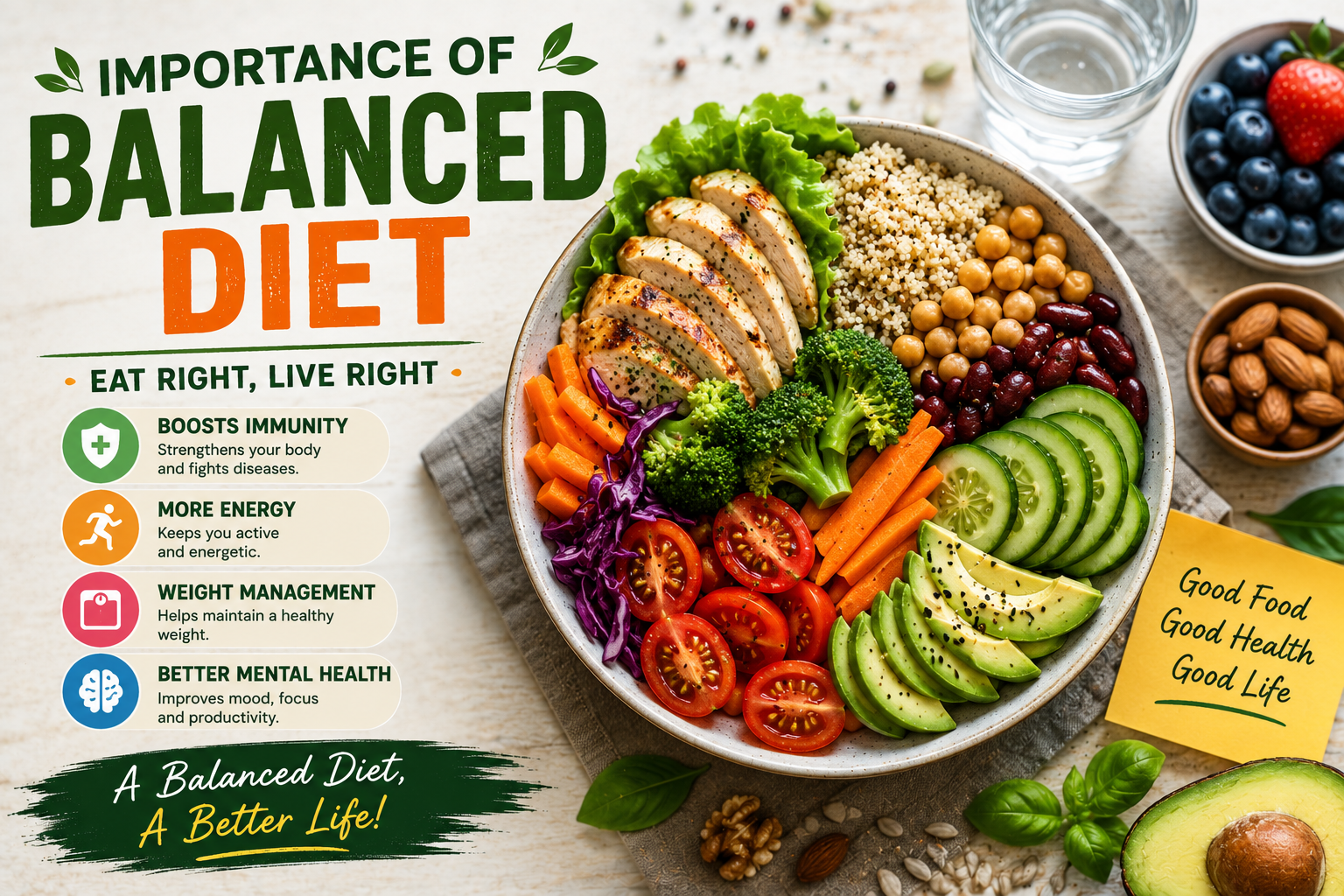
Introduction A balanced diet is one of the most important foundations of a healthy life. The food we eat provides the body with energy, nutrients, and strength to perform daily activities. A balanced diet means consuming the right amount of nutrients such as carbohydrates, proteins, fats, vitamins, minerals, fiber, and water in proper proportions. It helps maintain good physical health, mental well-being, and overall fitness. In today’s modern lifestyle, many people consume unhealthy foods such as junk food, sugary drinks, and processed snacks. Although these foods may taste good, they often lack essential nutrients needed by the body. Poor eating habits can lead to obesity, weakness, stress, diabetes, heart disease, and many other health problems. Therefore, maintaining a balanced diet is extremely important for people of all age groups. What is a Balanced Diet? A balanced diet is a meal that contains all essential nutrients in the correct quantities required for proper body functioning. Different nutrients perform different functions in the body. The major components of a balanced diet include: Carbohydrates Proteins Healthy fats Vitamins Minerals Fiber Water A healthy diet should include fruits, vegetables, grains, dairy products, nuts, seeds, and protein-rich foods. Importance of Nutrients in a Balanced Diet 1. Carbohydrates Carbohydrates are the main source of energy for the body. They help people stay active throughout the day. Healthy sources of carbohydrates: Rice Bread Oats Potatoes Whole grains Carbohydrates are especially important for students, athletes, and working professionals who require energy for physical and mental activities. 2. Proteins Proteins are essential for muscle growth, tissue repair, and strengthening the immune system. Healthy protein sources include: Eggs Milk Fish Chicken Pulses Paneer Soy products Protein is important for children, teenagers, and fitness enthusiasts because it supports body development and recovery. 3. Healthy Fats Many people think fats are unhealthy, but healthy fats are necessary for the body. They support brain function, energy storage, and hormone production. Healthy fat sources: Nuts Seeds Avocados Olive oil Fish However, excessive unhealthy fats from fried and processed foods should be avoided. 4. Vitamins and Minerals Vitamins and minerals help maintain body functions and protect against diseases. Examples: Vitamin C improves immunity Calcium strengthens bones Iron helps in blood formation Vitamin D supports bone health Fruits and vegetables are rich sources of vitamins and minerals. 5. Fiber Fiber supports digestion and prevents constipation. It also helps control blood sugar and cholesterol levels. Fiber-rich foods: Fruits Vegetables Whole grains Beans Oats Eating enough fiber improves digestive health and keeps the stomach full for longer. 6. Water Water is an essential part of a balanced diet. It helps maintain body temperature, digestion, and hydration. Benefits of drinking enough water: Prevents dehydration Improves skin health Helps digestion Removes toxins from the body Doctors often recommend drinking 7–8 glasses of water daily. Benefits of a Balanced Diet 1. Maintains Good Health A balanced diet provides all the nutrients required for proper body functioning. It strengthens the immune system and protects against diseases. 2. Boosts Energy Levels Healthy foods provide long-lasting energy for daily activities, studies, work, and exercise. 3. Supports Mental Health Nutrition affects brain function and mood. Healthy eating habits can reduce stress, anxiety, and fatigue.
Let Your moments blossem